


ヒトの水晶体は発生初期にどのような立体構造をつくるのか-水晶体の三次元形態と内部構造の解析-
八田さん、三ツ井さんが、ヒトの胚期から胎児初期にかけての水晶体について、MRIとトラクトグラフィーを用いて三次元的に解析し、形の変化だけでなく、内部の線維細胞の配向を反映すると考えられる構造の特徴を明らかにしました。
その結果、水晶体は発生初期にはほぼ球形に近い形をとりながら、成長とともに前後方向が相対的に短くなり、また内部では前極から後極へ向かう同心円状の配向構造がみられることが分かりました。
本研究成果は、2025年11月14日に公開されました。
研究の背景
水晶体は、眼の中で光を屈折させ、網膜上に像を結ぶために重要な透明組織です。
その発生過程については、組織学的には古くから研究されており、レンズ胞の形成、一次線維の伸長、二次線維の付加といった段階が知られています。
一方で、胚期から胎児初期にかけてのヒト水晶体について、三次元形態がどのように変化するのか、また内部の線維細胞が立体的にどのように配向しているのかについては、これまで十分には分かっていませんでした。
水晶体は非常に小さく、壊れやすく、発生初期標本でその内部構造を非破壊的に捉えることが難しかったためです。
そこで本研究では、ヒト胚・胎児標本に対して高解像度MRIと拡散テンソル画像法を適用し、水晶体の形態・計測・内部構造を一体的に解析しました。
研究の方法
本研究では、ヒト胚10例(CS19〜23)、**ヒト胎児25例(CRL 33.5〜126 mm)を対象に解析を行いました。
7テスラMRIを用いて、T1強調画像とDTI(拡散テンソル画像)**を取得し、眼球と水晶体を三次元再構築しました。
解析では、
- 水晶体の前後径
- 横方向・縦方向の径
- 体積
- 眼球全体に対する水晶体体積の割合
を測定しました。
さらに、DTIに基づくトラクトグラフィーを用いて、水晶体内部の拡散の向き、すなわち線維配向を反映すると考えられる構造を可視化しました。
主な結果
1. 水晶体は発生初期にはほぼ球形ですが、成長とともに前後方向が相対的に短くなりました
三次元再構築の結果、水晶体は正面から見るとほぼ円形で、発生初期には全体としてほぼ球形に近い形を示していました。
しかし側面からみると、成長とともに少しずつ前後方向が相対的に短い形へ変化していくことが分かりました。
具体的には、前後軸長は横径・縦径より短く、その比率は約0.9から0.7へと直線的に低下していました。
つまり、水晶体は成長に伴って単に大きくなるだけでなく、形そのものも少しずつ変化していることが示されました。
2. 水晶体も眼球も大きくなりますが、眼球に対する水晶体の割合は小さくなりました
眼球全体と水晶体の体積はいずれも発育とともに増加しました。
一方で、眼球全体に対する水晶体の体積比は、**胚期には約12%**だったものが、**胎児期には約5%**へと低下しました。
これは、水晶体自体も成長しているものの、眼球全体の成長のほうがより大きいことを示しています。
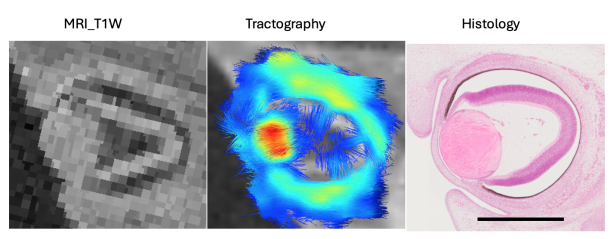
3. 水晶体内部には、前極から後極へ向かう同心円状の配向構造がみられました
DTIトラクトグラフィーでは、水晶体内部に特徴的な高信号の球状構造が描出されました。
組織切片との比較から、これは水晶体線維細胞の配向を反映していると考えられました。
特に、トラクトの向きは前極から後極へ向かって同心円状に並ぶようにみえ、水晶体の外層では線維細胞が整った配向を示していました。
一方で、中央付近ではFA値が低く、配向がやや不規則であることも分かりました。
この結果は、発生初期の水晶体が、見た目には単純な球状構造であっても、内部ではすでに非常に精緻な立体的線維構築をもっていることを示しています。
4. 明らかな部位差は見られませんでした
これまで、水晶体線維には局所的な違いがある可能性も指摘されていました。
しかし本研究では、前後軸に沿った形態や内部構造を三次元的に調べても、特定の象限に偏った明瞭な差は認められませんでした。
このことから、胚期から胎児初期のヒト水晶体は、少なくとも今回の分解能では、全体として非常に整った対称性の高い構造をとっていると考えられます。
この研究の意義
本研究は、ヒトの胚期から胎児初期にかけての水晶体について、三次元形態・計測・内部線維構造をあわせて解析した研究です。
今回の結果から、
- 水晶体は発生初期にはほぼ球形だが、成長に伴って前後方向が相対的に短くなる
- 眼球に対する水晶体の相対的な大きさは徐々に小さくなる
- 水晶体内部には、前極から後極へ向かう同心円状の線維配向が存在する
- 発生初期の段階から、すでに高度に秩序立った内部構造が形成されている
ことが明らかになりました。
また、組織学的に知られている一次線維・二次線維の分化と、MRI・DTIで見える内部構造変化のタイミングが対応していたことから、非破壊的画像解析によって発生中の水晶体構築を捉えられる可能性も示されました。
今後の展望
今回の研究では、水晶体内部のトラクトやFA分布が線維細胞配向を反映することが示唆されましたが、その詳細な生物学的意味や、成長に伴ってこれらの特徴がどのように変化していくのかは、今後さらに検討する必要があります。
また、より高解像度の解析や、出生後・成人期との連続的比較を行うことで、水晶体の透明性や光学特性がどのように形成されていくのかを、より深く理解できると考えられます。
われわれの研究室では今後も、MRIと形態学を組み合わせた研究を通じて、ヒト眼球の発生と構造形成を明らかにしていきます。
論文情報
論文タイトル
Morphology and Morphometry of the Human Lens in the Embryonic and Early Fetal Period
著者
Momoka Hatta, Rima Mitsui, Toru Kanahashi, Sena Fujii, Hirohiko Imai, Hiroki Otani, Shigehito Yamada, Tetsuya Takakuwa
公開日
2025年11月14日
DOI
https://doi.org/10.1111/cga.70031
ひとこと
水晶体はとても小さな組織ですが、光を正確に屈折させるためには、きわめて精密な形と内部構造が必要です。
今回の研究では、その精巧な構築が、胚期から胎児初期の段階ですでに始まっていることが見えてきました。
発生の早い時期にどのような立体構造がつくられるのかを知ることは、正常発生の理解だけでなく、眼の先天異常の理解にもつながると期待されます。
Related Posts

骨盤の男女差はいつごろから始まっているのか-ヒト胎児の骨盤傾斜と腰仙椎の向きを解析-

眼を動かす筋肉はどのように形づくられるのか-外眼筋の形成ー
