


中腸が体の中へ戻るとき、血管はどう配置されるのか-上腸間膜動脈と腸ループ形成の立体的関係-
ヒトの発生初期における**上腸間膜動脈(SMA)**とその腸管枝が、腸のループ形成や腹腔内への移動にどのように関わるのかを、三次元再構築によって詳しく解析しました。
その結果、腸を栄養する血管の枝分かれは、これまで考えられていたほど一様ではなく、個体ごとにかなりの多様性があること、また腸が体外側の空間から腹腔内へ戻る過程では、血管と腸が小さな単位ごとに整然と移動していくことが改めて示されました。
本研究成果は、2026年に Cells Tissues Organs 誌に掲載されました。
研究の背景
ヒトの発生の途中では、腸は一時的に臍帯の中の胚外体腔へ突出し、その後、腹腔内へ戻っていきます。
この過程で腸は複雑なループをつくりますが、それと同時に、腸へ血液を送る**上腸間膜動脈(superior mesenteric artery: SMA)**とその枝も、大きく位置を変える必要があります。
これまでの研究では、腸の位置変化やループ形成についてはある程度検討されてきましたが、SMAの枝が実際にどの腸管を栄養しているのか、またその枝分かれがどの程度一定なのかについては、十分には分かっていませんでした。
そこで本研究では、発生期ヒト標本の連続組織切片を用いて、腸管、腸間膜、SMA本幹、そしてその腸管枝を三次元的に再構築し、腸ループとの対応関係を詳しく調べました。
研究の方法
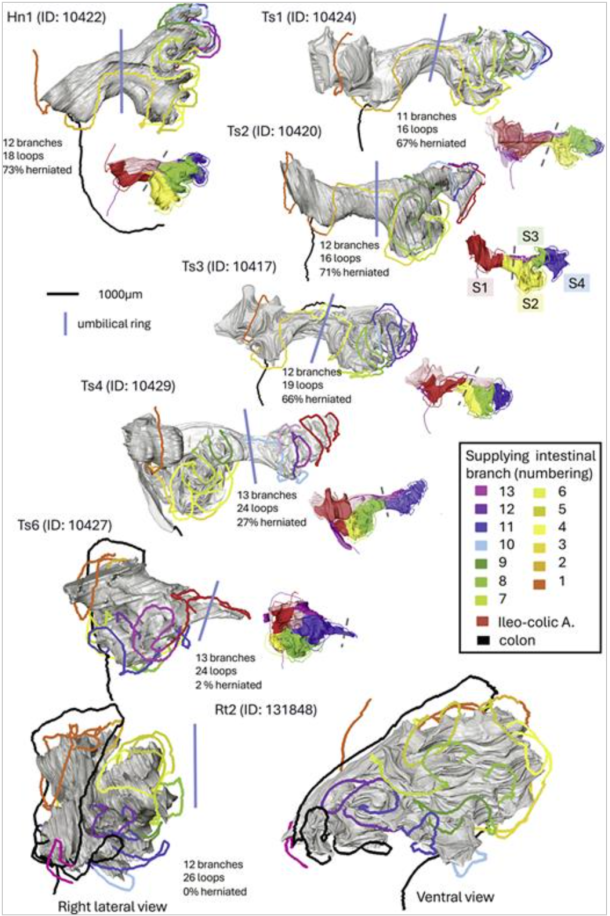
本研究では、ゲッティンゲン大学に所蔵されるBlechschmidt collectionのうち、胎生初期の7標本を対象に解析を行いました。
対象は、腸がまだ胚外体腔に突出している段階、腹腔内へ移行しつつある段階、そして戻った後の段階を含んでいます。
各標本について、連続組織切片をデジタル化し、
- 腸管
- 上腸間膜動脈(SMA)本幹
- SMAから分かれる腸管枝
- 腸間膜
を手作業でセグメンテーションし、三次元再構築を行いました。
さらに、腸管の中心線や腸間膜のひだをたどることで、腸の複雑な**三級ループ(tertiary intestinal loop)**を識別し、それぞれのループと血管分布の関係を調べました。
主な結果
1. SMAの腸管枝は11〜13本あり、枝分かれパターンには個体差がありました
解析の結果、SMAから分かれる腸管枝は11〜13本認められました。
これらの枝は、SMA本幹の根元側から末梢側へ向かう順に、口側から肛門側の腸管をおおむね順番に栄養していることが分かりました。
一方で、どの枝がどの腸管領域を担当するかは、標本間で一定ではありませんでした。
これまでの報告では比較的一定した分岐様式が示されていましたが、本研究では、SMAの枝分かれも他の血管と同様に、かなりの形態的ばらつきをもつことが示されました。
2. 腸が胚外体腔にある時期でも、腹腔内由来の枝がそこへ伸びていました
興味深いことに、腹腔内で分岐したSMAの枝が、臍輪を通って胚外体腔内の腸管まで到達している例が複数確認されました。
つまり、「腹腔の中の枝」「外に出た腸を養う枝」といった単純な区別では捉えきれず、発生途中の血管配置は、より柔軟で動的であることが分かります。
3. 1本の血管が1つの腸ループだけを担当するとは限りませんでした
腸の三級ループとSMA分枝の対応を詳しくみると、1本の血管が1つのループだけを栄養するとは限りませんでした。
実際には、
- 1本の血管が複数のループを栄養する
- 1つのループが複数の血管から栄養を受ける
といった例が見られました。
このことは、見た目には独立した腸ループがあっても、その血流支配は必ずしも単純な1対1対応ではないことを示しています。
4. 腸が腹腔内へ戻るとき、血管と腸は小さな単位ごとに移動していました
本研究では、腸間膜の再構築もあわせて行うことで、腸と血管の位置変化をより立体的に捉えることができました。
その結果、腸が胚外体腔から腹腔内へ戻る際には、腸全体がひとかたまりで大きく回転して戻るというよりも、各SMA分枝とそれが栄養する腸の区間が、小さな単位ごとに秩序立って移動していくことが支持されました。
これは、従来提案されてきた**“slide-and-stack”モデル**を補強する結果です。
つまり、腸は血管との連続性を保ちながら、無理のないかたちで順序よく腹腔内へ収まっていくと考えられます。
この研究の意義
腸の発生を考えるとき、これまでは「腸がどのように曲がるか」「どのように戻るか」といった形の変化に注目が集まりがちでした。
しかし実際には、腸が安全に移動するためには、それを栄養する血管が連続して保たれることが非常に重要です。
本研究は、SMAとその腸管枝を詳細に再構築することで、
- 腸管枝の分布には思った以上に個体差があること
- それでも、口側から肛門側へ順に栄養する基本ルールは保たれていること
- 腸の腹腔内への復帰は、血管と腸の小単位ごとの秩序ある移動として理解できること
を示しました。
これらの知見は、ヒトの正常発生の理解を深めるだけでなく、将来的には腸回転異常や腸管の位置異常など、発生異常の理解にもつながる可能性があります。
今後の展望
今回の解析は7標本に基づくものであり、さらに多くの標本で検討を進めることで、SMA分枝の多様性や共通性をより詳しく明らかにできると考えられます。
また、腸管・腸間膜・血管を一体として捉える視点は、今後、ヒト消化管発生の理解をより精密にしていくうえで重要になると期待されます。
われわれの研究室では今後も、三次元形態解析を通して、ヒト発生のダイナミックな構造変化を明らかにしていきます。
論文情報
論文タイトル
Superior Mesenteric Artery during Intestinal Loop Formation and Its Positional Changes from the Extracoelom to the Abdominal Cavity
著者
Tetsuya Takakuwa, Maki Kakeya, Nanase Ishida, Toru Kanahashi, Sena Fujii, Jörg Männer, Shigehito Yamada
掲載誌
Cells Tissues Organs
2026年, 215巻1号, 1–12
DOI
https://doi.org/10.1159/000545751
PubMed
40199263
ひとこと
発生の途中で腸が一時的に体の外側へ出て、そこからまた体内へ戻るという現象は、ヒト発生のなかでもとてもダイナミックな変化のひとつです。
今回の研究では、その過程を「腸そのもの」だけでなく、「それを支える血管」と一緒に見ることで、より実態に近い理解が得られました。
今後も、立体的な形態解析を通じて、ヒト発生のしくみを丁寧に明らかにしていきたいと考えています。
Related Posts

骨盤の男女差はいつごろから始まっているのか-ヒト胎児の骨盤傾斜と腰仙椎の向きを解析-

眼を動かす筋肉はどのように形づくられるのか-外眼筋の形成ー
